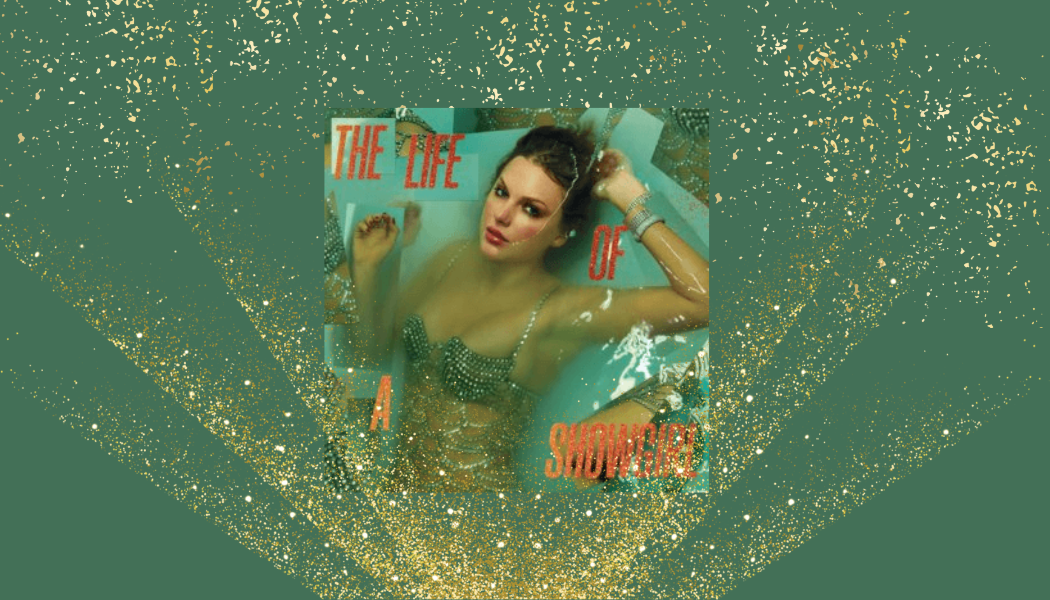
Taylor Swift’s 12th studio album, “The Life of a Showgirl,” came out Oct. 3, and I (a self-declared Swiftie) haven’t listened to it since. Why?
Freud (as I learned in ATAV) might say that I am too overwhelmed by the stress of college applications to process it, I’m lacking a romantic interest to relate to it or I simply don’t like it. While some of those assumptions might be reasonable, the truth is that I do generally like the album. My initial reactions actually included comments like “I love this,” “Wow, it’s so good” and “This feels like the perfect pop song.”
Following the album’s release, I began to think I may have overreacted. As I heard more and more negative reactions, I let them slowly shape my opinion of the album, and I stopped listening to it. But now that the conversation has started to die down, I’m revisiting the album.
Accompanied by upbeat pop sounds, “The Life of a Showgirl” maintains some of the lyricism Swift adopted in “folklore,” “evermore” and “The Tortured Poets Department.” In some songs, this intersection of her lyricism and pop sound is clear.
The album’s first single, “The Fate of Ophelia,” demonstrates Swift’s ability to include complex literary references with more contemporary, positive beats. The song’s allusion to Ophelia, a character in Shakespeare’s “Hamlet,” is an interesting continuation of Swift’s exploration of the madwoman archetype in songs like “mad woman” and “I Did Something Bad.”
Lines such as “But love was a cold bed full of scorpions / The venom stole her sanity” further reflect Swift’s songwriting ability. Her use of an intricate metaphor to convey the idea of love driving someone mad demonstrates Swift’s poetic mindset, even in her new era of upbeat pop music.
Many other songs on the album reflect Swift’s lyricism. “Opalite,” one of the most upbeat and popular (and potentially controversial) songs, demonstrates Swift’s deliberate approach to her songwriting. Throughout the song, Swift references recurring symbols across her discography. The line “I thought my house was haunted” is a nod back to “Who’s Afraid of Little Old Me?” where she sings of her “house with all the cobwebs.” The line “I used to live with ghosts” similarly echoes her song “How Did it End?” in which she sings “my beloved ghost and me.”
Furthermore, Swift uses the color of the sky to represent her mood, something she has done in songs like “Maroon,” “Soon You’ll Get Better” and “The Best Day.” I will admit, it takes a very deep knowledge of Swift’s entire discography to catch some of these references, but seeing them adds depth to songs like “Opalite,” which could seem like a shallow pop song to some at first listen.
Swift has an intriguing but slightly alarming approach to her song “Father Figure.” The song is an extrapolation of George Michael’s song of the same name, and it works on multiple levels to represent Swift’s experience in the music industry. Many see the song as a criticism of Scooter Braun, who sold away Swift’s masters, but I think the song also works as a continuation of the stories that Swift tells in her songs “The Lucky One” and “Clara Bow.”
All of these songs represent Swift’s experience in the music industry—her struggles, triumphs and the expectations put on her. “Father Figure” deals with deception, betrayal and self-interest, all aspects Swift has dealt with as a celebrity. As I listened to the song for the first time, I noticed the potential for a Marxist analysis; the repetition of “this love is pure profit” is a nod to the transactionality of the relationships that Swift experiences in the music industry. However, while there is an intriguing deeper meaning in “Father Figure,” some lyric choices (if you’re curious, look up the lyrics!) in the song ultimately distract from it.
I couldn’t possibly talk about a new Taylor Swift album without mentioning the most important song: the fifth track. Swift’s track five is generally reserved for the most emotional song on the album (past track fives include “All Too Well” and “Dear John”). “Eldest Daughter” isn’t exactly sad, but it is very reflective. Swift sings, “’Cause I thought that I’d never find that beautiful, beautiful life that / Shimmers that innocent light back / Like when we were young.” I found these lyrics especially moving, as they continue developing the theme of innocence that Swift deals with in every album. “Eldest Daughter” has become one of my favorite songs on the album because, along with the thoughtful lyrics, it has a lighter melody, sort of reminiscent of Swift’s earlier albums.
Another song worth mentioning is “Wood,” which has become divisive among fans. According to Swift, the song is innocently about superstitions. But it doesn’t take Freud to tell that this song is definitely not about superstitions. The sexual innuendos throughout the song pose the question of who Swift actually writes for. A large portion of her fanbase includes young girls, and “Wood” could be painting the wrong picture for them. Swift’s choice to release this song could reflect her shift to writing songs for herself instead of for others.
My feelings on “Wood” are still mixed. I still feel slightly uncomfortable when I listen to it, but I also acknowledge the powerful statement that such a declarative song can have. Also, it’s important to consider that much of the backlash from listeners stems from the highly gendered expectations placed on Swift. Why can male artists sing about the same subjects without retaliation?
Across the rest of the album, Swift incorporates similar literary elements. “Ruin The Friendship” and “The Life of a Showgirl” demonstrate Swift’s storytelling, and “CANCELLED!” and “Honey” showcase her thoughtful lyricism.
I care a lot about the lyrics in every song I listen to. If I don’t find them to be creative or thoughtful, I probably will not like the song. But that’s not my issue with “The Life of a Showgirl.” I found that the album’s upbeat vibes and some of the lyric choices distracted me from noticing Swift’s usual lyricism. Additionally, had this album been released over the summer, I may have been listening to it more, but I now find myself gravitating instead towards Swift’s “evermore,” “folklore” and “TTPD.”
Despite hints of strong lyricism and storytelling across the album, the combination of the upbeat pop sounds, unnecessary word choices and even my current preferences makes me struggle to fully adopt “The Life of a Showgirl” as the new soundtrack of my year.