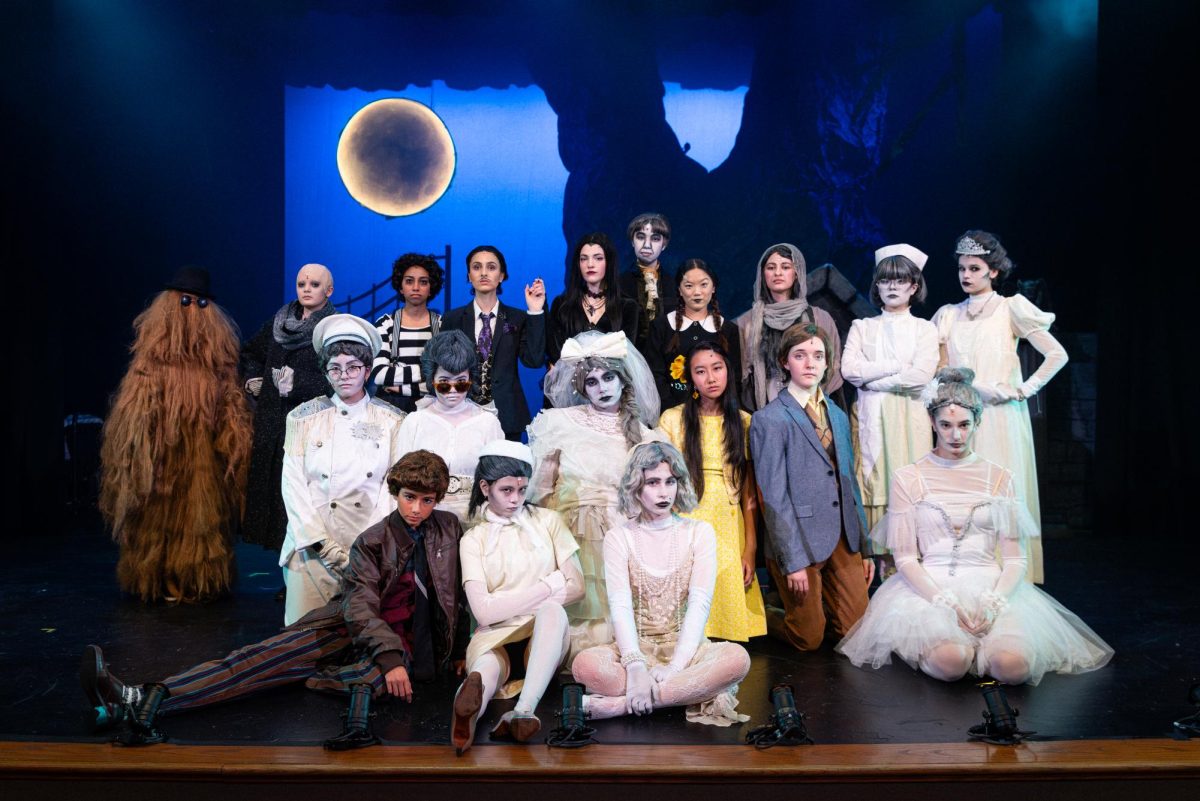
On Nov. 7, Castilleja’s production of “The Addams Family,” directed by Tannis Hanson, opened to a full house. The musical marked the end of months of rehearsals, tech work and design planning by students and faculty.
The cast leaned into the show’s dry humor and oddball characters, balancing quick comedic timing with outstanding vocal performances. Nightingale Smith ‘26, who played Morticia, shared her process of memorizing lines and holistically embodying her character, noting that she felt lucky to have been cast “as a character [she] felt super comfortable in.”
“I really focused on [Moriticia’s] physicality and her voice. When I was able to embrace the role physically, my voice kind of followed suit. And then the first day of dress rehearsal, when we were in our costumes, I felt like a completely different person,” Smith said.
Rehearsals began in early fall, with the production team coordinating costumes, makeup, props and choreography to match the show’s funny, quirky tone.
Aaminah Memon ‘26 was the student choreographer of the show and part of the ensemble of ancestors. The production was defined by its many dance routines and complex movements, many of which Memon designed. “I’d always meet with Ms. Hanson when planning dances for each song to get a sense of what she wanted and to understand what her vision was,” she said.
Memon noted how she would “listen to each song a bunch of times and think about the number of people in the cast, and how [she] might be able to stitch something together.”
Ameena Haque ‘26 was the stage manager for the musical and worked in close partnership with Aya Matsutomo, Castilleja’s technical theater director. Haque’s responsibilities included overseeing backstage operations, training crew members, writing rehearsal reports and running lights during the show.
Haque explained how she collaborated with Matsutomo in determining the distinctive ambiance and color scheme created by light in the production: “Aya designs all of our lighting, and she definitely puts a lot of thought into the different numbers and what sort of vibe they have.”
When there were “big, classical musical theater songs,” the lights would be “a little more flashy and fun.” However, during the sadder, more vulnerable moments of the show, they prioritized “spotlights and softer lighting.”
Additionally, Haque explained how some characters had “very specific lighting colors.” For example, for Morticia, they “did a lot of reds,” while for Wednesday, they used purples.
Nora Schroepfer ‘29 detailed her experience as a member of the ensemble. She was excited by the opportunity to “ develop” her own character, explaining how the ensemble had a lot of freedom in “picking what [they] wanted to do” and had “input on characterization.”
Additionally, Schroepfer expressed gratitude for the opportunity the musical gave her to meet students from other grades: “I feel like everyone really bonded a lot. I didn’t know a lot of people across different grades, so I was really happy to have met other students.”
The show stood out not just for its polished singing, dancing and technical design, but for the sense of unity behind it. Every part of the production, from the choreography to the lighting to the character work, showed how much care went into building the world of the show.
The cast and crew took creative risks and pushed through months of work to bring something lively and sharp to the stage. Their close-knit dynamic was evident, and it made the comedy brighter, the emotional beats clearer and the overall performance stronger. The production felt both professional and personal and left the audience with a real appreciation for the cast and crew that made it possible.