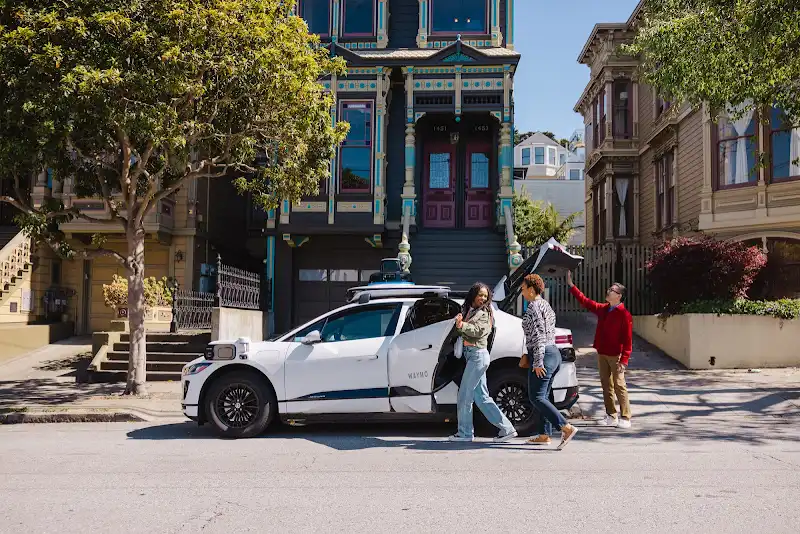
Self-driving cars are no longer a futuristic concept. In cities like San Francisco, Phoenix and Los Angeles, Waymo vehicles with no human driver behind the wheel are already picking up passengers and navigating busy streets.
Waymo’s story is deeply tied to the Bay Area. The company began in 2009 as Google’s self-driving car project, rooted in Silicon Valley’s culture of experimentation and innovation. After years of testing, Waymo was cleared to operate autonomous vehicles on public roads, with San Francisco as one of its primary testing sites. As of September 2025, Waymo vehicles had driven more than 38.8 million miles autonomously in San Francisco alone.
On paper, Waymo’s mission is hard to argue with. Human error causes the majority of car accidents, and Waymo vehicles take away the problem of humans who text, drink or fall asleep at the wheel. They rely on sensors, cameras and artificial intelligence to make decisions based on data rather than emotion. In theory, this should make roads safer. Additionally, for people who cannot drive, self-driving cars could provide independence or mobility that traditional transportation cannot.
However, Waymo’s expansion affects more than just passengers. Many people rely on driving as a second source of income, and self-driving cars threaten those jobs. According to the Associated Press, Uber and Lyft driver Joseph Augusto said, “I personally am not against technology; what I am against is unfair treatment. These autonomous vehicle companies do not seem to be held to the same standards as us drivers.”
Having taken a Waymo ride myself, I’ve experienced firsthand how smooth, predictable and relaxing the technology can be. However, as someone planning to get their driver’s license this year, the presence of autonomous vehicles on busy streets raises concerns. Learning to drive around new cars that make decisions without human judgement feels unnerving.
Another major concern is accountability. Who should be held responsible when a Waymo car causes an accident? Is it the fault of the company, the engineers or the city that approved their use?
This question has become impossible to ignore after a Waymo vehicle struck and killed KitKat, a beloved bodega cat in San Francisco’s Mission District. According to the San Francisco Chronicle, a witness said that the vehicle “did not even try to stop,” and Waymo’s condolences and donation did little to address the larger issue of responsibility.
Legally, if a Waymo were ever at fault in a fatal crash involving a person, California law generally holds the company liable, and its insurance would cover claims. While Waymo vehicles have been present at the scene of fatal crashes in the past, as NBC Bay Area reports, the company was not found responsible in those cases and has never been responsible for a fatal crash.
Waymo represents both the promise and risks of Silicon Valley innovation. We want to believe in the potential for technology to make streets safer and provide new opportunities for people who cannot drive. At the same time, the lack of accountability and the impact on communities remains worrisome. Until there is a system that protects people and ensures responsibility, we cannot fully trust that autonomous vehicles belong on our streets.