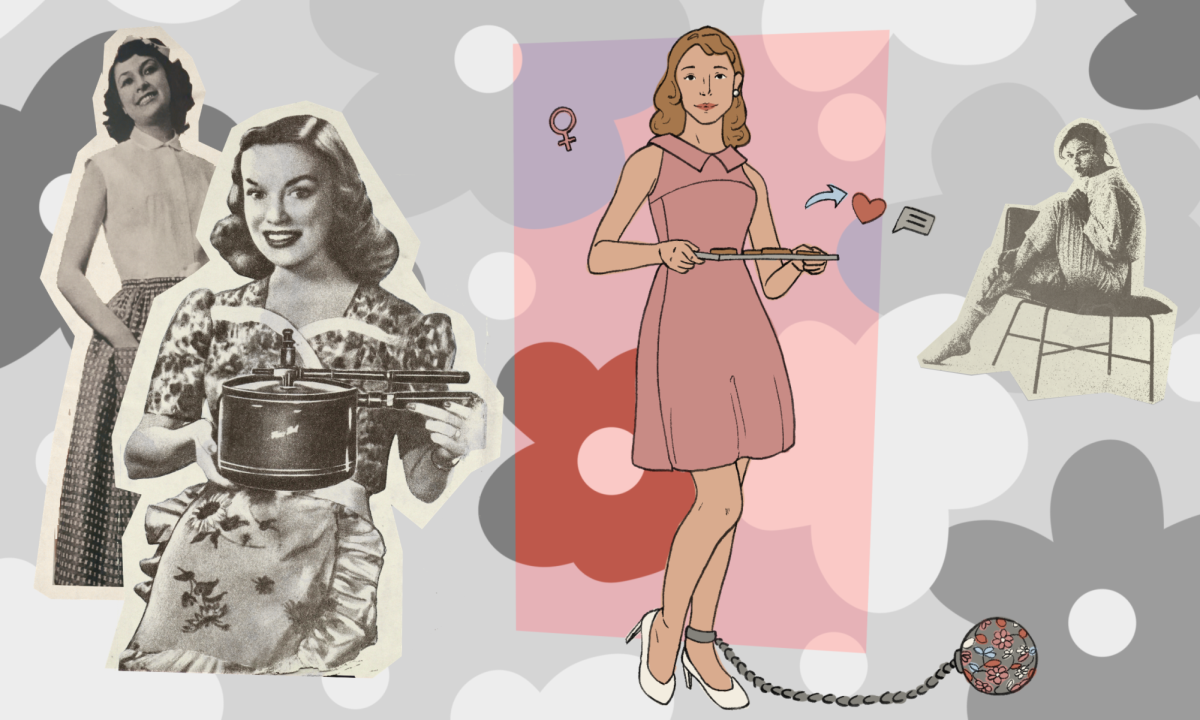
If you’ve been on the internet in the past few years, you’ve most likely heard of trad wives. Short for traditional wives, trad wives have become a viral internet sensation, posting videos of homemade bread, spotless kitchens and cheerful devotion to their husbands.
In flowery pastel dresses, they tell the internet how happy they are to honor their so-called natural roles and how empowering it is to be a trad wife. Their comment sections are filled with praise: “This is real empowerment. She chose this life.”
This emphasis on personal choice segues into choice feminism, a larger debate within modern feminism. Choice feminism argues that all personal decisions made by women, regardless of their personal alignment with traditional feminist goals, are inherently feminist and powerful because they are chosen.
But is every choice feminist? Is there such a thing as a non-feminist choice?
The simple answer is no, not all choices are feminist. Feminism is defined as a range of social movements, political ideologies and philosophies advocating for the social, economic, personal and social equality of the sexes. This definition is distinct from choice feminism, as it pushes for the greater liberation of women from patriarchal systems of oppression.
While individual choice is an aspect of traditional feminism, it is not the main one. Traditional feminism is about respecting individual choices while criticizing the public promotion of those choices as universally empowering.
Trad wives claim that their choice to conform to traditional female roles is empowering, and that whether or not you agree with their choice, the decision is ultimately theirs. Furthermore, some trad wives use their platforms to argue that this choice should be encouraged for young women considering their future life paths.
While being a trad wife is not inherently anti-feminist, its online portrayal typically highlights traditional feminism as an aesthetic, failing to recognize the real-world limitations and consequences. Becoming a trad wife often means being financially dependent on your spouse and having no source of personal income. Such reliance leaves women with little financial freedom and opportunity, which limits their ability to change course if the relationship or circumstances change.
According to a 2021 study, domestic abuse occurs disproportionately in many of these so-called traditional relationships, making it all the more difficult to leave due to a lack of agency without monetary control. Feminist empowerment depends not only on choosing a path for the present but on paving a way for future possibilities as well. By presenting a lifestyle lacking in financial freedom to millions of viewers as empowering, the trad wife position stops being just a personal preference and starts redefining expectations. Feminism is meant to expand women’s options, not narrow them.
Gender norms publicly encouraged by online trad wives influence a younger generation of girls into believing that being a trad wife is what they are supposed to want. This promoted ideal creates social pressure to conform to traditional expectations, limiting women’s opportunities and freedoms.
Similarly, trad wives frame these traditional roles as natural for women, a sentiment that actively causes harm to the feminist movement. By claiming that these roles are inherent to women, trad wives reinforce patriarchal standards that have been used to oppress women for generations. Throughout history, gender expectations, specifically regarding women, have been used to force women into servitude, removing their autonomy.
But if feminism is only about freedom, then does any freely chosen lifestyle count as feminist?
Not necessarily. Simply put, people often assume that having a choice automatically means the available choices are equally liberating, but this is untrue. Some decisions preserve independence and future flexibility, while others reduce them. A choice can be freely made in the moment but still limits what a person is able to do later.
When these lifestyles are marketed online as the most fulfilling or correct path for women, they stop being neutral personal choices and begin shaping cultural expectations.
Feminism isn’t about picking a role; it’s about making sure women aren’t stuck in one.